
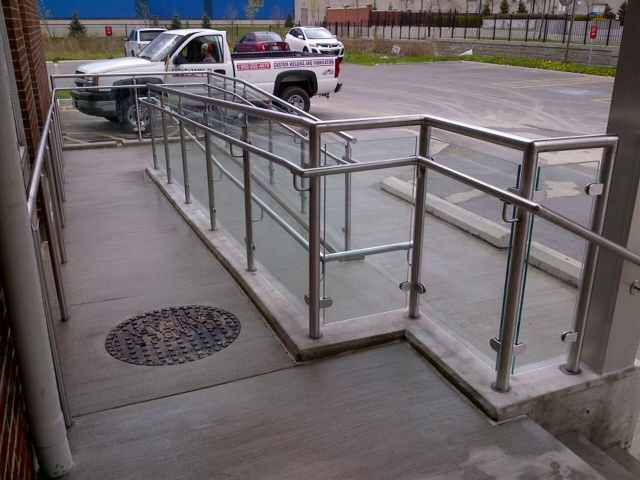
Stainless steel railings can develop rust when salt, contamination, trapped moisture, or fabrication defects compromise their protective surface layer. Stainless steel is corrosion-resistant, not corrosion-proof, and its performance depends on the grade, finish, exposure, and maintenance.
Brown discolouration does not automatically mean the railing needs replacement; however, surface staining, embedded iron contamination, and deeper corrosion require different responses, so identifying the cause comes before choosing a treatment.
What Causes Stainless Corrosion?
Several conditions can explain why a previously clean railing is developing orange spots or brown streaks:
- De-icing salt: Chlorides from road spray and salted walkways can accumulate on exposed metal and encourage localized corrosion when moisture is present.
- Trapped deposits: Dirt and salt collect around brackets, fasteners, and sheltered surfaces where rainfall cannot rinse them away.
- Iron contamination: Particles transferred from carbon-steel tools, nearby grinding, or unsuitable cleaning materials can rust on the stainless surface.
- Poor weld finishing: Welding oxides and contamination left after fabrication can reduce corrosion resistance around joints.
- Unsuitable cleaners: Bleach, chloride-containing products, and hydrochloric acid can stain or damage stainless steel.
For Toronto properties, winter maintenance should address salt exposure as well as snow removal, particularly around entrance railings and roadside installations.
Is It Staining or Damage?
Tea staining is superficial brown discolouration associated with corrosion, but appearance alone does not establish the condition of the entire railing.
Watch for these differences:
- Light surface discolouration: May be primarily cosmetic, particularly when the underlying surface remains smooth.
- Rust concentrated around welds: Can indicate fabrication-related contamination or inadequate post-weld treatment.
- Small cavities or recurring spots: May indicate pitting rather than removable surface residue.
Treat movement, damaged connections, or visible metal loss as reasons to arrange a professional inspection not as a cleaning project.
Does Stainless Steel Grade Matter?
Grade 316 generally offers better resistance to chloride exposure than grade 304, making material selection important for installations exposed to salt; however, 316 can still corrode under sufficiently aggressive conditions.
A suitable railing specification considers more than the handrail itself: fasteners, brackets, surface finish, drainage, and accessibility for cleaning all influence performance. Upgrading the grade does not eliminate maintenance, especially where deposits remain beneath covers or inside poorly drained connections.
How Should You Clean It?
Start with a manufacturer-approved mild detergent, clean water, and a soft cloth; rinse thoroughly, then dry the surface. Regular washing removes deposits that could otherwise encourage staining.
Avoid steel wool, abrasive scouring, bleach, and masonry acid, and do not assume that a cleaner suitable for nearby glass is also suitable for stainless hardware. If ordinary washing does not remove the marks, ask a qualified fabricator about compatible treatment rather than experimenting with stronger chemicals.
Professional cleaning and passivation may help restore corrosion resistance, but treatment must address the underlying contamination, finishing, or exposure problem to reduce recurrence.
How Can You Prevent Recurrence?
Clean sheltered areas as deliberately as exposed surfaces, because rain may wash the top rail while leaving deposits beneath brackets and around post bases. Check these areas after salt exposure, and follow the installer’s maintenance instructions rather than waiting for visible rust.
Railings Toronto, operated by Pro Weld, manufactures and installs glass and metal railings for residential and commercial properties across Toronto and the GTA. If your stainless steel railings are developing persistent staining, contact the team to discuss their condition and suitable next steps. Photographs of affected joints, post bases, and nearby salt exposure can help frame the conversation before an assessment.