
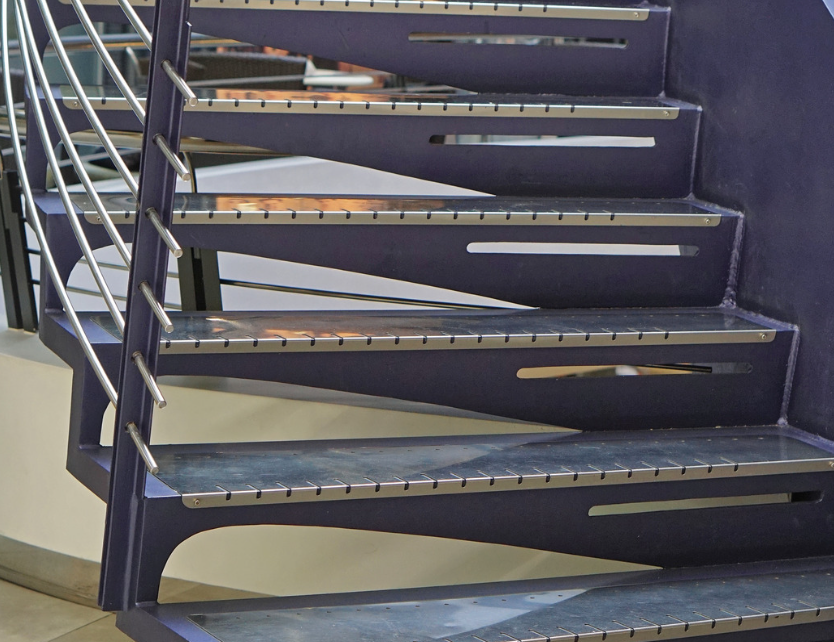
Wet metal steps can turn from safe to scary in a single shower. Smooth treads, worn coatings, and a thin film of water (or early frost) can make exterior metal stairways and landings feel like ice rinks, especially on rental properties, commercial entries, and condo fire escapes. The goal is to add traction and confidence without turning your rail and stair system into something that looks purely industrial.
Why Metal Steps Get So Slick So Fast
Metal is unforgiving when it comes to water and wear. Powder‑coated or painted treads can lose their original texture over time as foot traffic polishes the surface. Add rain, fine dust, or a bit of algae, and you get a smooth, low‑friction film that shoes cannot grip. In shaded stairwells, water lingers longer and dew or light frost forms easily, so even “dry‑looking” metal can be dangerously slick at the first step.
Low‑Profile Traction That Respects Your Railings
If you chose metal railings and stairs for their clean lines, you do not want safety upgrades to clash with that look. Fortunately, there are low‑profile options designed specifically for metal. Slim anti‑slip strips and treads can be mechanically fastened or adhered to each step, adding texture exactly where feet land without covering the entire tread. Many products come in neutral or colour‑matched finishes that blend into the existing metalwork, so the focus stays on your railing design, not on big strips of tape.
Permanent Treads For Heavy‑Use Metal Stairs
On fire escapes, commercial side entrances, or frequently used exterior stair towers, more permanent traction is often the safest choice. Bolt‑on aluminum or stainless treads with raised patterns can be fastened directly to metal stringers or existing treads, creating a rugged, non‑slip surface that sheds water and light snow. For grated metal steps, integrated serrated grating can be used to increase grip while still allowing drainage. These upgrades are built to handle constant traffic and harsh weather far better than coatings alone.
Where Coatings Still Make Sense
Non‑slip paints and coatings can still play a role on metal stairs, especially when the existing surface is structurally sound but too smooth. Grit‑enhanced coatings add texture across the whole tread and can refresh faded metal at the same time. On galvanized or previously painted steel, surface prep and compatible products are critical so the coating bonds properly and does not peel under weather and foot traffic. Coatings work best when combined with dedicated treads or nosings on leading edges, where slips most often start.
Drainage, Cleaning, And Rust Control
Even the best anti‑slip products underperform if water has nowhere to go. Metal stairs and landings should be checked for spots where water pools at the back of the tread or along the stringers. Improving pitch, adding small weep holes, or clearing blocked drains helps surfaces dry faster after rain. Regular cleaning to remove algae, dirt, and winter de‑icing residue keeps traction products working as designed and slows down corrosion, especially on older steel systems. Addressing rust early—before it undermines welds or mounting points—protects both safety and appearance.
Quietly Safer Metal Stairs
The most effective safety upgrades on metal stairs are the ones people barely notice. By pairing discreet anti‑slip elements with durable treads where needed, improving drainage, and staying ahead of rust, you can turn nerve‑wracking wet steps into solid, confident footing.
Your metal railings and stair structure keep the clean look you chose, while you stop holding your breath every time it rains. Contact us today for all your railing and welding needs.